
Martingale Collar Vs Flat Collar: Best For Your Dog 2026
Use a flat collar for everyday ID; use a martingale for escape-prone pullers.
Choosing between a martingale collar vs flat collar can feel tricky. I’ve fit hundreds of dogs and coached many families on this exact choice. In this guide on Martingale Collar Vs Flat Collar: Which Dogs Need Each?, I explain how each collar works, who should wear it, how to fit it, and when to skip collars for a harness. You will leave with clear, safe steps you can use today.

Source: sootheandsettle.com
What Is a Martingale Collar?
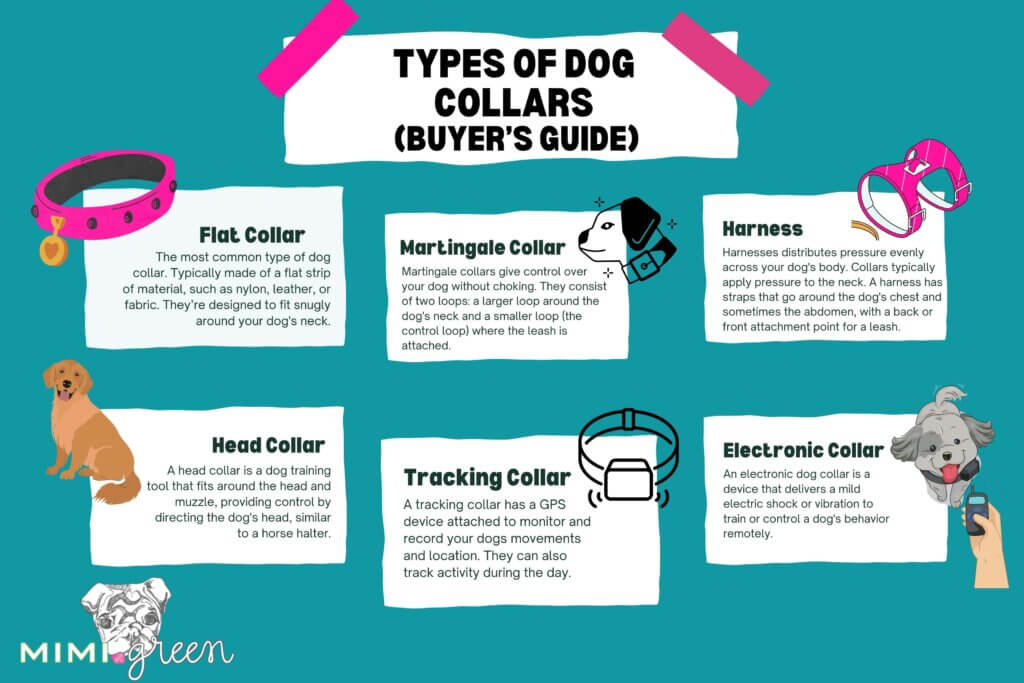
A martingale collar is a no-slip, limited-tightening collar. It has two loops. The large loop sits on the neck. The small loop tightens the collar a bit when the leash pulls. It stops at a set point, so it does not choke when sized right.
Why use it? It helps stop backing out. This is key for dogs with narrow heads. Think greyhounds and whippets. It also helps with mild leash control without harsh jerks. It offers more even pressure than a choke chain. It is not a quick-fix tool. It must fit well and be used with kind training.
Key features:
- Limited cinch prevents full closure when fit right
- Good for escape artists
- Works with positive reinforcement
Safety note: Do not leave a martingale on in a crate. The small loop can catch. Use a breakaway collar for unsupervised wear.
Source: shopmimigreen.com
What Is a Flat Collar?
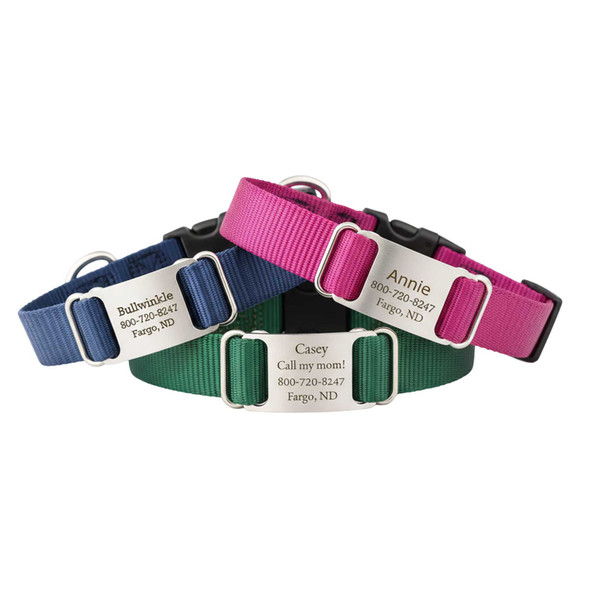
A flat collar is the standard everyday collar. It is a simple strap with a buckle and D-ring. It holds ID tags and a license. It comes in nylon, leather, or bio-thane.
Why use it? It is light and simple. It is a fine choice for calm dogs that do not pull or back out. It is also good for short potty breaks or quick yard checks.
Limitations:
- Offers little control for strong pullers
- Some dogs can slip out if the head is narrow
- Not ideal for dogs with neck or airway issues
If your dog pulls hard, use a harness or training plan, not only a flat collar.

Source: dogsinneedofspace.com
Martingale Collar vs Flat Collar: Key Differences
Here is how the martingale collar vs flat collar compare in the real world.
- Slip resistance: Martingale holds best on narrow heads. Flat collars can slip on sighthounds and some mixes.
- Pressure: Martingale spreads pressure around the neck. Flat collars place force on a small area at the front of the neck.
- Control: Martingale gives modest extra control. Flat collars give the least.
- Training use: Martingale works well with loose-leash work. Flat collars are fine for trained, calm walkers.
- Risk profile: Both can harm if misused. Avoid strong jerks. For toy breeds and known airway issues, use a harness.
For many families, the choice shifts by context. You might walk in a martingale and keep a flat collar for tags at home.
Source: shopmimigreen.com
Which Dogs Need Each?
This is the core of martingale collar vs flat collar decisions. Match the tool to the dog’s build, behavior, and health.
Great fits for a martingale:
- Sighthounds like greyhounds, whippets, and salukis
- Escape artists that back out when spooked
– Medium to large dogs that pull some - Shy rescues that bolt in new places
Great fits for a flat collar:
- Calm, trained walkers who do not pull
- Dogs that need only ID and quick leashes
- Dogs that wear a harness for most walks
Use a harness instead of any collar for:
- Brachycephalic breeds like pugs and French bulldogs
- Toy breeds prone to tracheal collapse
- Dogs with neck pain or a cough
- Heavy pullers in busy areas
Tip: Many owners use both. Keep a flat collar for tags. Use a martingale or harness for walks.
Source: bolderk9.com
Sizing, Fit, and Safety Checks
A good fit makes all the difference.
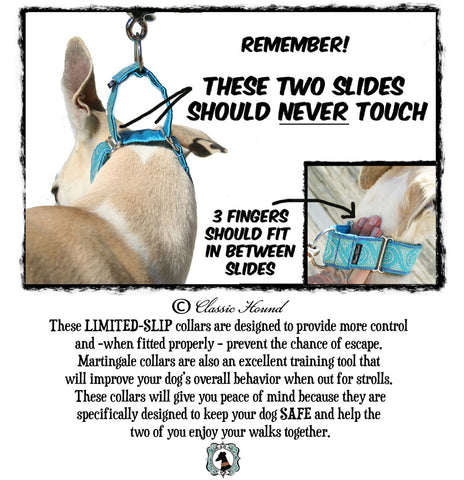
How to fit a martingale:
- Measure the neck at mid-point and at the head’s widest part.
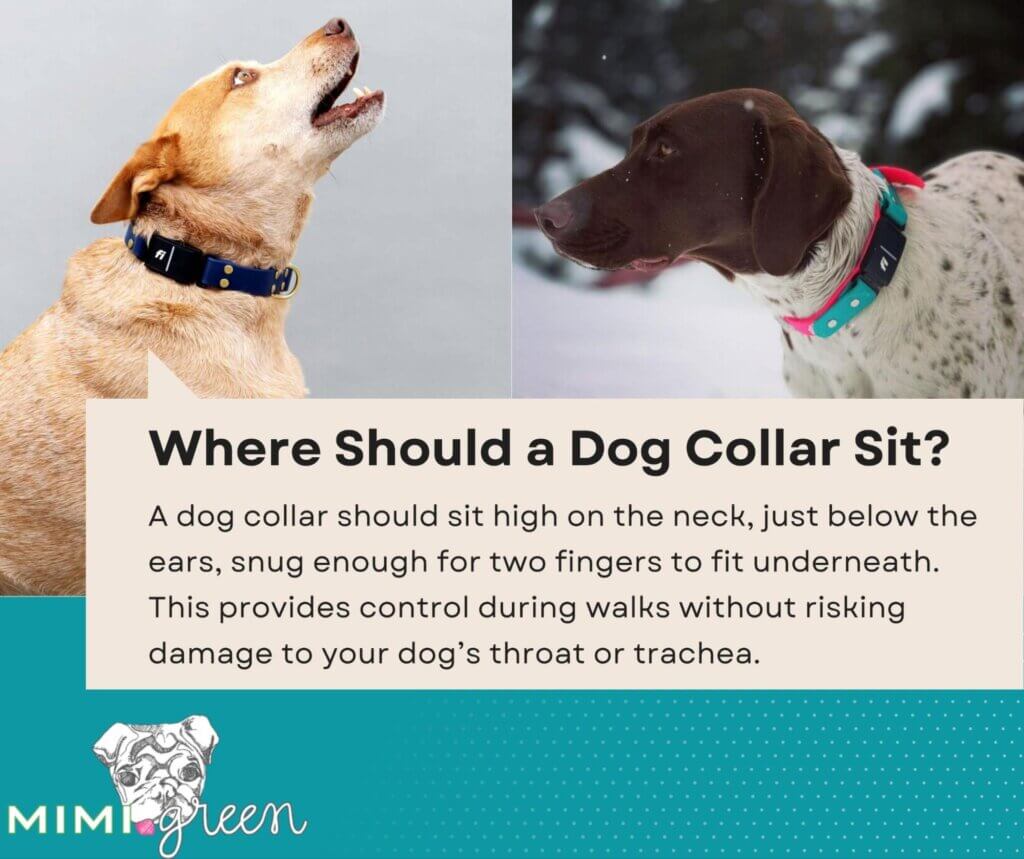
- Adjust so, when tightened, you can slide two fingers under the collar.
- The small loop should lie flat at rest and not form a tight triangle on pull.
How to fit a flat collar:
- Place it mid-neck. Leave room for two fingers under the strap.
- Check for sliding over the ears. If it slips off too easy, consider a martingale.
Safety checks each week:
- Run your fingers under the collar. Look for hair loss, sores, or heat.
- Test the buckle and stitching.
- Avoid leaving martingales on in crates or during play. Switch to a breakaway for unsupervised time.
Red flags:
- Free cough, gagging, pawing at the neck
- Hair breakage or skin marks under the collar
- A martingale that closes to full loop-on-loop contact
Fix any of these at once. Refit or change tools.
Source: boldleaddesigns.com
Training Applications and Humane Use
A martingale can support kind training. Pair it with rewards and timing. Do not snap or jerk. Use it to prevent slips while you build loose-leash skills.
Simple plan:
- Reward your dog for a slack leash and check-ins.
- Stop or pause when the leash gets tight.
- Step back and reward when your dog returns.
When to add a harness:
- Your dog pulls hard despite work
- You need joint relief or more control
- Your dog has any airway risk
A flat collar is fine for a trained dog who walks well. Use it for short trips and calm paths. If pulling returns, go back to a martingale or harness for a while.
Source: classichound.com
Pros and Cons at a Glance
Martingale pros:
- Prevents backing out when sized right
- Adds gentle control
- Even pressure around the neck
Martingale cons:
- Not safe in crates or rough play
- Needs careful fit and checks
- Can still strain the neck if misused
Flat collar pros:
- Simple, light, and low cost
- Best for tags and quick clips
- Great for calm, trained dogs
Flat collar cons:
- Easy to slip for narrow heads
- Least control for pullers
- Can stress the trachea if yanked
Source: dogids.com
How to Choose: A Simple Decision Tree
Use this step-by-step guide for martingale collar vs flat collar choices.
- Does your dog back out or have a narrow head? Choose a martingale.
- Does your dog pull hard or have airway risks? Choose a front-clip harness.
- Is your dog calm on leash and well trained? A flat collar is fine.
- Want belt-and-suspenders safety? Use a martingale for walks and a flat collar for tags at home.
- Unsure? Ask your vet or a certified trainer to check fit in person.
Sample scenarios:
- New shelter greyhound: Martingale for walks, flat collar for ID at home.
- Small pug that coughs on leash: Front-clip harness, flat collar for tags only.
- Big lab that pulls for squirrels: Front-clip harness to train, martingale later if safe.
Real-World Cases from the Field
From my work with rescue groups, I saw a shy whippet slip a flat collar in a parking lot. We refit him with a martingale and practiced calm exits. He never slipped again.
A young husky backed out when a truck backfired. A martingale plus a backup leash to the harness kept him safe while we trained focus and check-ins.
My own senior beagle wore a flat collar at home for tags. On walks, we used a harness to protect his throat as he aged. The mix matched his needs over time.
These cases show how martingale collar vs flat collar is not one static choice. It shifts with age, health, and training.
Care, Materials, and Durability
Choose materials that fit your weather and routine.
- Nylon: Light, strong, easy to wash. Can fray with time.
- Leather: Durable and comfy once broken in. Needs care to avoid cracks.
- Biothane: Waterproof, easy to clean, stays flexible in cold.
- Chain loop on martingales: Offers smooth slide. Check for rust and sound welds.
Care tips:
- Rinse salt and mud. Air dry flat.
- Check hardware for wear and rust.
- Replace at the first sign of cracking or loose stitching.
- Choose reflective trim for night walks.
Frequently Asked Questions
Is a martingale collar safe for everyday wear?
It is safe for supervised walks when fit right. Do not leave a martingale on in a crate or during group play due to snag risk.
Will a martingale hurt my dog’s neck?
When fit and used well, it applies even, limited pressure. Avoid leash jerks and switch to a harness if your dog coughs or has a tender neck.
Can I train loose-leash walking with a flat collar?
Yes, if your dog is mild on leash and you reward often. For strong pullers, a martingale or front-clip harness makes the process easier and safer.
What sizes do martingale collars come in?
They come in sizes for toy to giant breeds. Measure neck and head, then follow brand charts to ensure the collar cannot slip over the ears.
Which is better: martingale collar vs flat collar for puppies?
Most puppies do best with a harness for growth and comfort. Use a lightweight flat collar for tags, and add a martingale later if slips become an issue.
Can my dog wear both a collar and a harness?
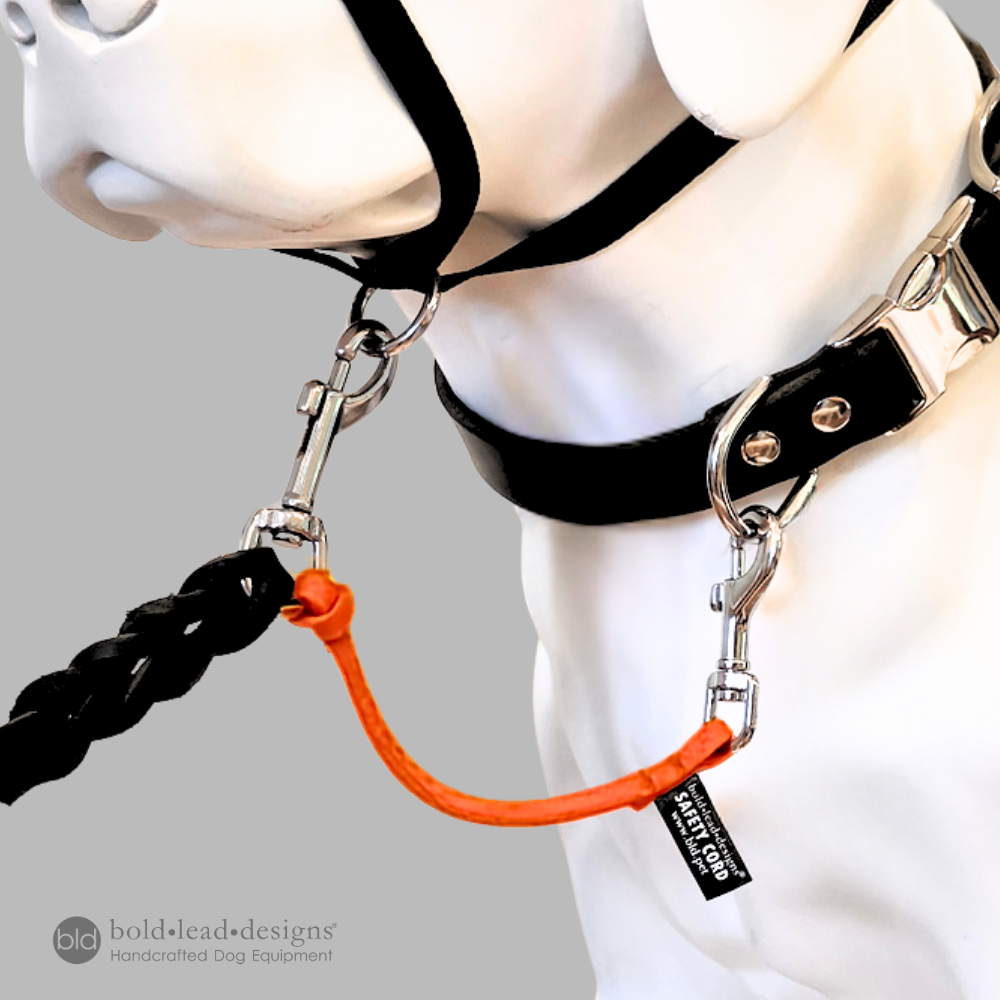
Yes. Many owners clip the leash to a harness and keep a flat collar for ID. Some also use a backup safety clip from harness to collar.
Are martingale collars allowed everywhere?
Most places allow them, but rules can vary for group classes or daycares. Ask first, and always follow the facility’s gear policy.
Conclusion
The best tool is the one that fits your dog’s body, health, and skills. Use a martingale to prevent slips and add light control. Use a flat collar for tags and calm, trained walks. Choose a harness for pullers and any dog with airway risk. Try the steps here, watch your dog’s comfort, and adjust as needs change. If you want help, ask your vet or a certified trainer to confirm fit. Ready to dive deeper? Subscribe for more training guides, or leave a comment with your dog’s setup and I’ll help you fine-tune it.