How To Brush A Dog That Bites: Safe, Proven Techniques in 2026
Use a basket muzzle, go slow, pair brushing with treats, and stop before stress.
You can learn How To Brush A Dog That Bites: Safe Techniques That Actually Work without fear or guilt. I’ve helped hundreds of nervous, bite-prone dogs accept grooming using science-based steps and a kind touch. This guide blends behavior know-how with real-world tips, so you can brush safely, build trust, and see steady progress at home.
Why Dogs Bite During Brushing
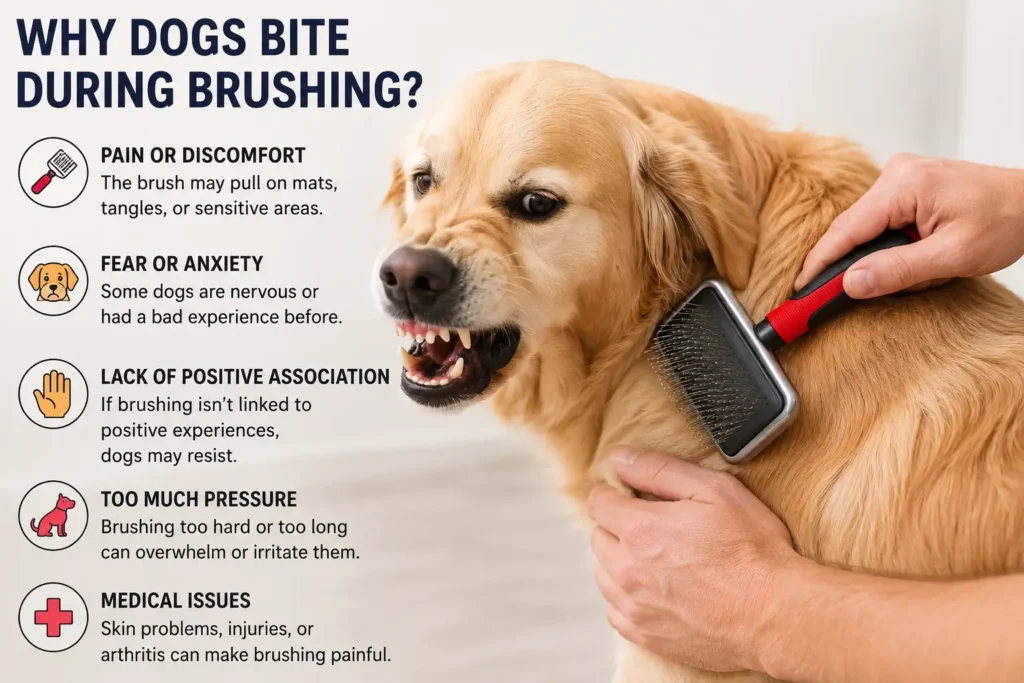
If you want How To Brush A Dog That Bites: Safe Techniques That Actually Work, you must first learn the why. Biting is often a fear response, not “stubbornness.”
Common reasons include:
- Pain or past injury. Mats can pull skin. Joints can hurt. Brushing can sting.
- Fear from bad past grooming. A rough session can set a dog on edge next time.
- Sensory overload. Sound, touch, and restraint can pile up and trigger a snap.
- Lack of slow teaching. The dog never learned that brushing predicts good things.
Watch for body language:
- Licking lips, yawning, turning away.
- Tense face, wide eyes, pinned ears.
- Tail tucked, stiff body, slow freeze.
Your first win is spotting early stress and stopping before it peaks. That is the heart of How To Brush A Dog That Bites: Safe Techniques That Actually Work.
Source: swedencare.com
Safety First: Tools, Setup, and Rules
How To Brush A Dog That Bites: Safe Techniques That Actually Work starts with safe gear and a calm plan.
Use the right tools:
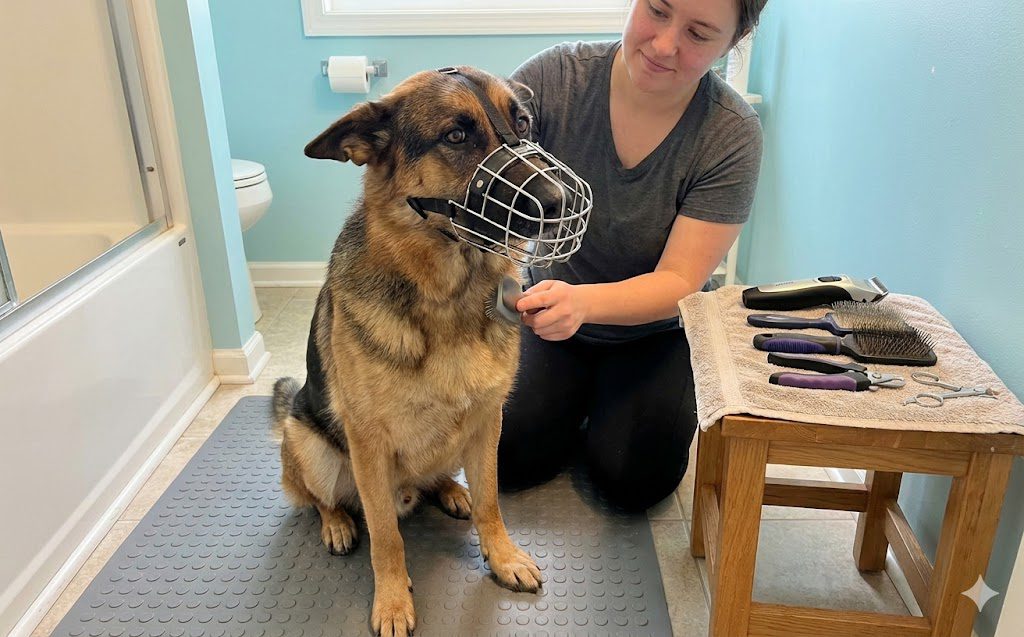
- Basket muzzle. The dog can pant, drink, and take treats. Fit it well and train it with food.
- Treats. Use high-value soft treats or a lick mat with canned food or xylitol-free peanut butter.
- Slicker brush with soft pins, a gentle undercoat rake, and a detangling spray for mats.
- Non-slip mat. A stable surface reduces worry and sliding.
- Long-line or baby gate. Create space, not force.
Set the room up for calm:
- Keep it quiet. Turn off loud music. Close doors.
- Keep sessions short. Two to three minutes can be enough at first.
- Angle your body. Work from the side, not face-to-face.
- Have a “stop” rule. If stress rises, you stop. Always.
Talk to your vet:
- Rule out skin issues, hot spots, or pain.
- Ask about short-term meds if stress is high. Many vets use fear-free plans with safe options.
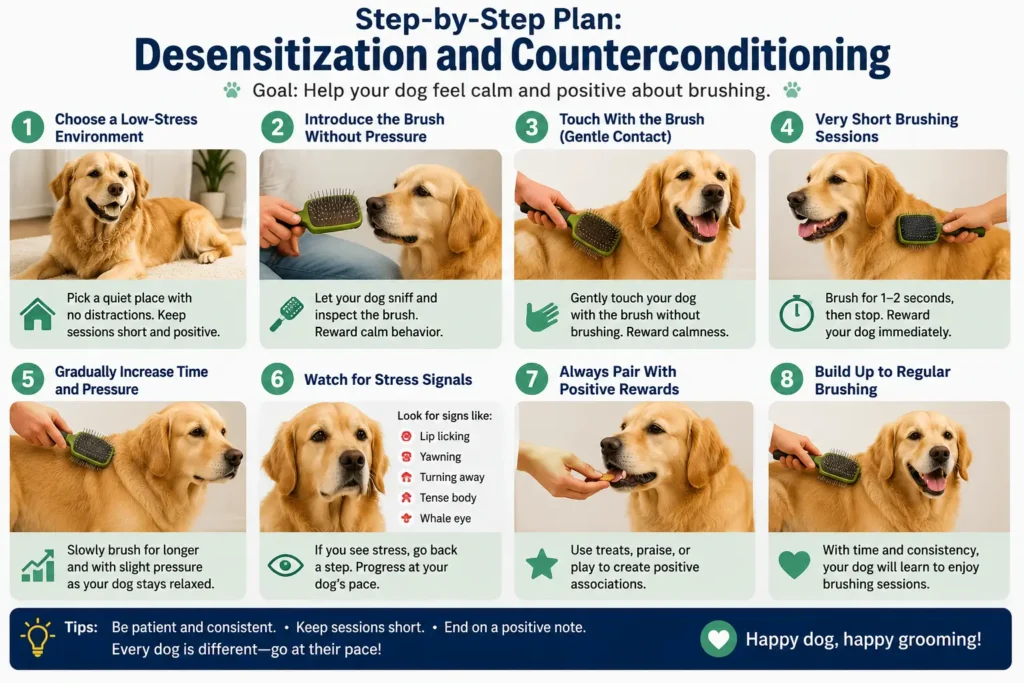
Step-by-Step Plan: Desensitization and Counterconditioning
This is the core of How To Brush A Dog That Bites: Safe Techniques That Actually Work. You change what brushing means. Brush predicts good things.
Start with easy wins:
- Show the brush, then feed. Hide the brush, then no food. Repeat until the brush makes your dog happy.
- Touch the brush to your leg. Feed. Touch to the floor. Feed. Keep it slow.
- Touch the brush to your dog for one second. Feed. Remove brush. Wait. Repeat.
- Add tiny moves. One light stroke. Feed. Pause. One more light stroke. Feed again.
- Increase only one thing at a time. More time, or more pressure, or a new body area. Not all at once.
Use a count:
- One stroke equals one treat. Two strokes equals two treats. Your dog will tell you when to stop.
Work under threshold:
- If your dog tenses, yawns, or pulls away, go back a step.
- Keep your sessions short and end on a small win.
Add a station:
- Place a lick mat at a set spot. Groom there, and only good things happen there.
Source: doctorgroomer.com
Cooperative Care: Teach “Consent” Cues
For How To Brush A Dog That Bites: Safe Techniques That Actually Work, teach your dog a way to say yes.
Use a chin rest:
- Lure your dog to place their chin on a towel or your hand.
- Mark and treat while the chin stays down.
- Start grooming only when the chin is down. Stop the moment the chin lifts. This builds trust.
Use a start button:
- Teach your dog to step onto a mat to “start.”
- If they step off, you pause. You are listening. That reduces fear and lowers biting risk.
Muzzle training with joy:
- Smear the inside with soft food. Let your dog push in to lick. Remove. Repeat.
- Add the strap for one second. Treat. Build time in tiny steps.
- Keep the muzzle as a seat belt, not a punishment.
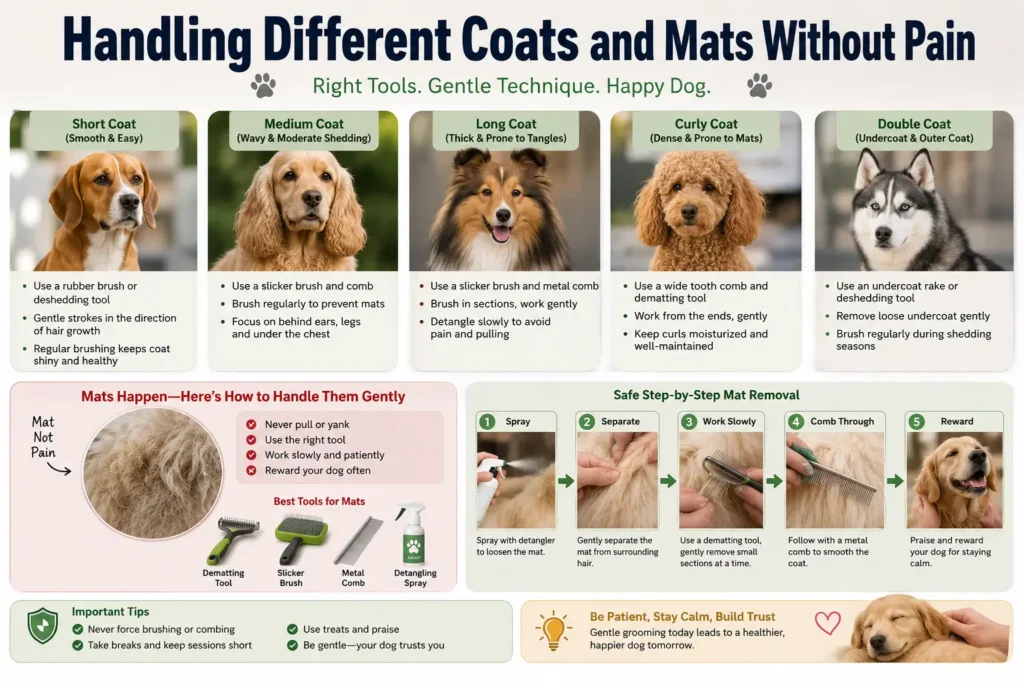
Handling Different Coats and Mats Without Pain
You cannot use How To Brush A Dog That Bites: Safe Techniques That Actually Work if the coat work hurts. Gear and touch matter.
For short coats:
- Use a soft brush or rubber curry in slow, gentle strokes.
- Keep sessions short and end before your dog gets antsy.
For double coats:
- Use an undercoat rake first to lift shed hair.
- Follow with a slicker to smooth. Work with the lay of the fur.
For long or curly coats:
- Mist a detangler to cut friction.
- Hold hair above a tangle to buffer skin. Work the end first. Move toward the skin in tiny steps.
For tight mats:
- Do not yank. That hurts and can cause bites.
- Use a mat splitter only if your dog is calm and the mat is small.
- If mats are big or at the armpits or ears, see a pro groomer or vet.
Body map:
- Rate body zones from easy to hard. For example: back is easy, tail is hard.
- Start on easy spots. End before you reach the hardest spots.

Source: newtopsilicone.com
When Things Go Wrong: Pause, Reset, and Protect
Even with How To Brush A Dog That Bites: Safe Techniques That Actually Work, you will hit bumps. That is normal.
If your dog growls or snaps:
- Freeze for one second. Then move back. Do not punish. Punishment hides warning signs and can make biting worse.
- Take a full day off. Then go back two steps in your plan.
If you get a mat you cannot clear:
- Stop. Call a groomer who uses fear-free methods.
- Ask your vet if light sedation is safer for a one-time severe groom. Safety first.
Build a backup plan:
- Keep nails short to reduce snagging.
- Use a coat-friendly harness to avoid matting behind legs.

Progress Tracking and a Simple Schedule
To nail How To Brush A Dog That Bites: Safe Techniques That Actually Work, track tiny wins. Data keeps you honest and calm.
Use a simple log:
- Date, body area, tool, number of strokes, and your dog’s stress from 1 to 5.
- Note any triggers like doorbells or guests.
A two-week sample plan:
- Days 1–3: Brush shown. Treats flow. No touch yet.
- Days 4–6: One-second touch on the shoulder, then one stroke.
- Days 7–10: Two to five strokes on easy spots. Start chin rest.
- Days 11–14: Add a new area. Use the lick mat. Add the muzzle with food.
Keep sessions short:
- One to three minutes, two times a day at first.
- End while your dog still wants more.

Source: tailoredpetservices.com
Mistakes to Avoid and Pro Tips
These points will keep How To Brush A Dog That Bites: Safe Techniques That Actually Work on track.
Avoid:
- Forcing the brush when your dog is tense.
- Skipping vet checks for pain or skin issues.
- Long, exhausting sessions that push your dog over the edge.
- Punishing growls. Growls are important safety messages.
Do:
- Pay one treat per stroke at the start.
- Use a calm voice and slow hands.
- Keep tools soft and clean.
- Groom after exercise, when your dog is relaxed.
Personal lesson from the field:
- A shepherd in my care would air-snap at any brush. We spent a week feeding for brush sights only. By week two, we added one stroke with a lick mat. By week three, a basket muzzle plus a chin rest let us clear the undercoat with zero snaps. Slow steps won big.

Source: farmingtonvethospital.com
Frequently Asked Questions of How To Brush A Dog That Bites: Safe Techniques That Actually Work
Is a basket muzzle safe for brushing?
Yes, a basket muzzle lets a dog pant, drink, and take treats. Fit it well and train it with food so it feels normal.
How long should each grooming session be?
Start with one to three minutes. End before stress rises, and build time slowly.
What treats work best during brushing?
Use soft, high-value treats or a filled lick mat. The goal is steady, calm licking while you brush.
Can I fix severe mats at home?
If mats are large or tight to the skin, see a groomer or vet. For small mats, mist detangler and work from the ends in tiny steps.
Should I sedate my dog for grooming?
Only a vet can advise on meds or sedation. It can be helpful for severe fear or pain, but training is still key for long-term success.
Conclusion
How To Brush A Dog That Bites: Safe Techniques That Actually Work comes down to safety, kindness, and tiny steps. Use a basket muzzle, pay well with treats, and stop before stress peaks. Check pain, set clear consent cues, and log progress so you see wins.
You can do this. Start with one calm, one-stroke session today. If you found this helpful, subscribe for more fear-free care tips, or leave a comment with your dog’s progress.