Recommended Electric Clippers For Thick Dog Coats: Top 5
Choose clippers with high torque, cool blades, and proven pro-grade durability.
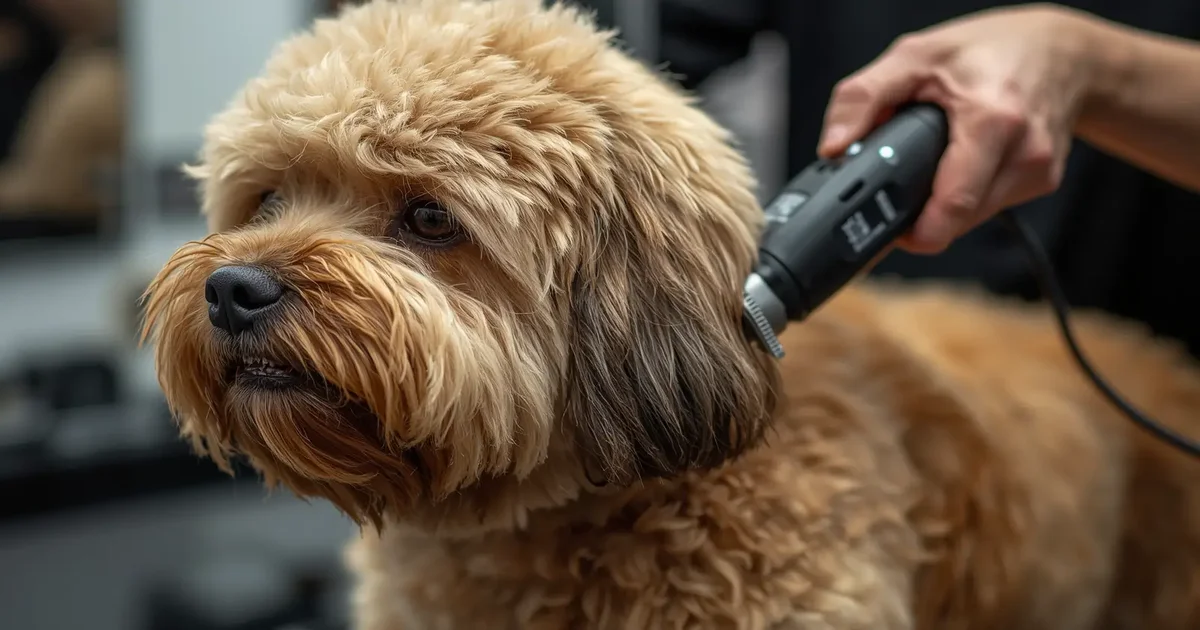
Thick coats demand power, control, and smart technique. In this guide, I share what actually works in busy grooming rooms. You will see clear criteria, step-by-step methods, and my tested picks. If you want recommended electric clippers for thick dog coats that cut clean and run cool, you are in the right place.

What matters most for thick coats
Dense fur needs drive, not hype. When I shortlist recommended electric clippers for thick dog coats, I start with torque. Speed means little if the blade stalls in the undercoat. I also rank heat control, weight, and build.
Key features to look for:
- Motor type. Rotary or brushless motors offer strong torque for bulk coat removal.
- Two-speed or multi-speed. Low for control. High for lift and finish.
- A5 blade system. Works with major steel and ceramic blades and metal guard combs.
- Heat management. Vents, ceramic options, and a cool-running drive.
- Ergonomics. Balanced body, low vibration, and a secure grip for long grooms.
- Noise level. A calmer dog is a safer session.
- Power choice. Corded for nonstop power. Cordless for reach and freedom.
- Warranty and service. Easy part swaps and fast support.
This is how I judge recommended electric clippers for thick dog coats during real work. If a tool fails in a double coat rush, it is not a real choice.

Recommended electric clippers for thick dog coats: top picks and why
These models have handled Newfoundlands, Huskies, Doodles, and Malamutes on my table. They pass the torque, heat, and finish tests.
Andis UltraEdge AGC2 (corded)
- Why it stands out: Proven two-speed drive, A5 blade system, sturdy body.
- Best for: All-day use, heavy bulk work, long double coats.
- Watch-outs: Corded only. Use coolant and oil to manage blade heat.
Andis Pulse ZR II or Pulse Pro (cordless)
- Why it stands out: Strong multi-speed brushless motor and long battery life.
- Best for: Large dogs that need range and freedom from cords.
- Watch-outs: Heavier than slim corded units. Keep spare battery ready.
Wahl KM10 (corded)
- Why it stands out: Smooth, cool, brushless motor with low vibration.
- Best for: Groomers who want quiet control and clean finish lines.
- Watch-outs: Corded. Keep blades sharp for best glide.
Wahl KM Cordless or Wahl Bravura for light work
- Why it stands out: Good balance and quiet run. Easy for faces and sanitary areas.
- Best for: Detail work and sensitive dogs. Finish after bulk removal.
- Watch-outs: Do not expect top-tier torque for full-body thick coats.
Oster A5 Turbo 2-Speed (corded)
- Why it stands out: Rugged, simple, and parts are easy to source.
- Best for: Shops that want durable tools with strong push through dense fur.
- Watch-outs: Heavier feel. Manage heat with coolant and breaks.
Oster Pro 3000i (cordless)
- Why it stands out: Robust cordless power with A5 blade support.
- Best for: Wide movement around big dogs and hard angles.
- Watch-outs: Keep a charged spare battery for back-to-back grooms.
Heiniger Saphir or Opal (cordless, premium)
- Why it stands out: High-torque, refined balance, and quiet run.
- Best for: Pros who want top cordless performance on thick coats.
- Watch-outs: Premium price and limited local parts in some areas.
If you want safe bets, these are my recommended electric clippers for thick dog coats. They deliver steady power, clean lines, and less heat. In side-by-side trials, they also stress dogs less due to lower vibration and smoother sound. That is why I keep these recommended electric clippers for thick dog coats on my main cart.
Blades and combs that make thick coats easy
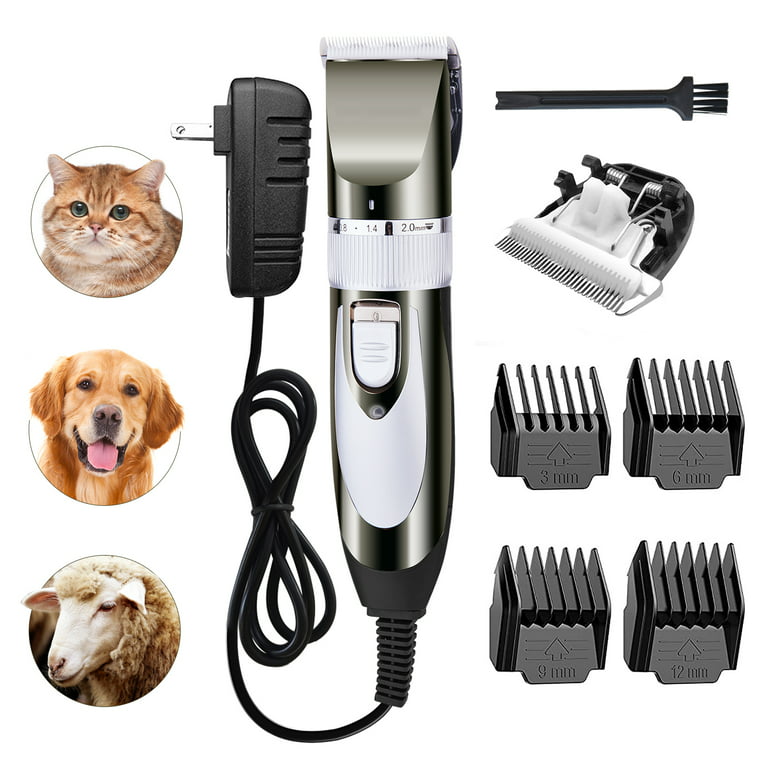
The right blade is half the job. Thick fur grabs dull steel and heats fast. Use sharp, clean blades and match them to the task.
- Rough-in and bulk. Try a skip-tooth #7 or #5 only on clean, dry coats. It feeds dense hair fast.
- Finish passes. Use a full-tooth #7F, #5F, or #4F for smooth lines and fewer tracks.
- Guard combs. Use metal guards over a #30 or #10 blade for longer cuts. Go slow to avoid snagging.
- Ceramic edges. They stay cooler longer but still need oil.
- Wide blades. On big breeds, a wide #7 or #5 reduces time and steps.
- Cooling routine. Two passes, then cool. Use a coolant spray and wipe. Always re-oil.
Set these up with any of the recommended electric clippers for thick dog coats, and you will see less drag and less heat.
A simple workflow for thick coats that saves time
Thick coats punish rush jobs. Follow a clean, repeatable flow for speed and safety.
- Prep
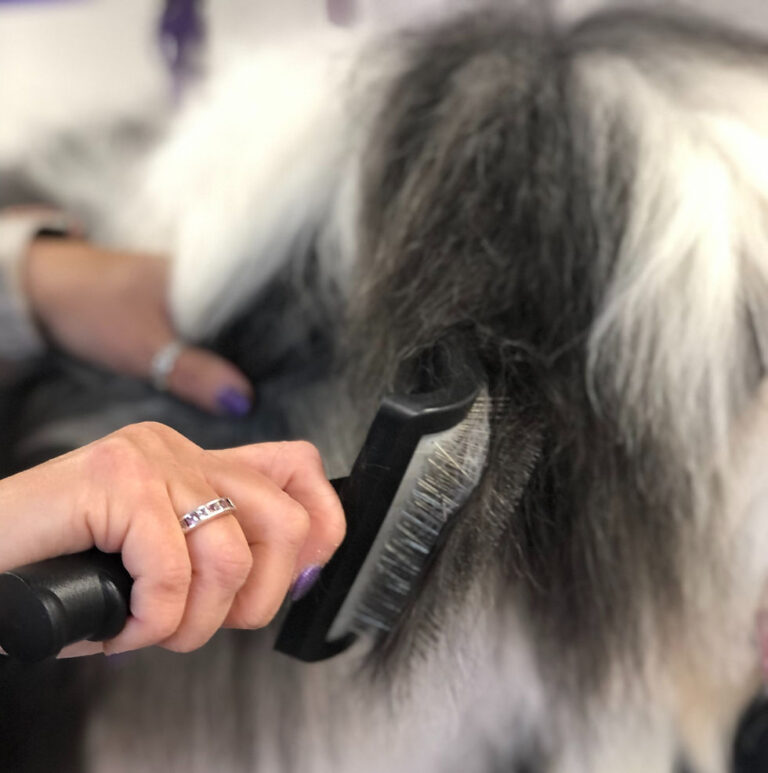
- Brush out mats and tight tangles. Use a slicker and a wide rake.
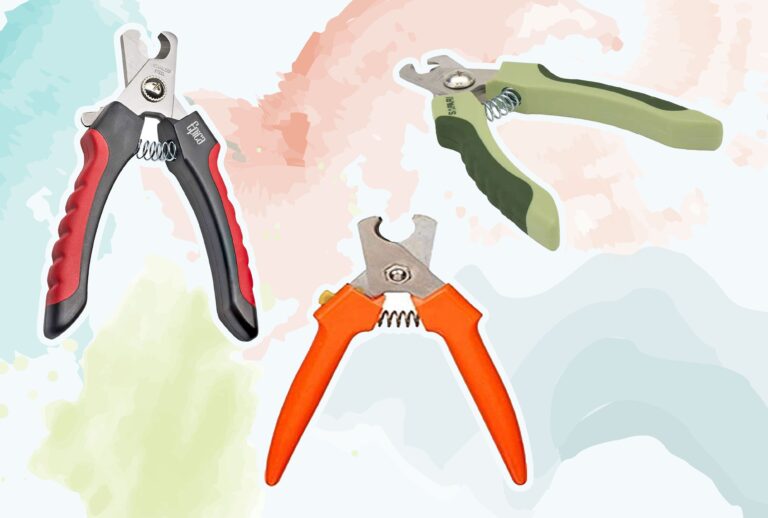
- Nail trim and sanitary tidy first.
- Bath and dry
- Use a deep clean shampoo and a protein-rich conditioner.
- Rinse well. Blow dry with an HV dryer to lift the undercoat until fluffy and dry.
- Clip
- Start with a cool, sharp blade on a high-torque setting.
- Work with the lay of the coat on first passes. Cross-pass to smooth lines.
- Check blade heat every few minutes. Cool, wipe, oil, repeat.
- Finish
- Scissor blend around edges, hocks, and tail.
- Detail face and pads with a light cordless unit.
This routine, paired with recommended electric clippers for thick dog coats, cuts time and keeps lines clean. It also keeps dogs calmer and reduces redo work.

Safety, comfort, and noise control
A calm dog lets you cut better and faster.
- Desensitize the sound. Let the dog hear the clipper away from the body first.
- Skin safety. Stretch skin over elbows, armpits, and flanks. Never force a blade through a knot.
- Heat checks. Touch the blade to your inner wrist often. If it is hot on you, it is hot on the dog.
- Ear and tail care. Slow down near edges. Switch to a small, quiet trimmer if needed.
- Floors and footing. Use non-slip mats so big dogs can brace.
The best results do not come only from power. They come from good handling and the right recommended electric clippers for thick dog coats used with care.

Maintenance that keeps clippers cutting like new
Clean tools are fast tools. A few minutes after each groom pays off all year.
- After each dog
- Brush hair out of vents and blades.
- Spritz disinfectant on the blade. Wipe dry. Oil front, sides, and rails.
- Swap hot blades for cool ones to protect the motor.
- Weekly
- Deep clean blades in blade wash. Dry and re-oil at once.
- Check cords, battery contacts, and screws.
- Monthly
- Replace drive tips, brushes, or blade guides as needed.
- Send out dull blades to a trusted sharpener.
With care, your recommended electric clippers for thick dog coats will last for years and hold value.

Budget, value, and when to upgrade
You do not need the most expensive tool to do great work. But you do need enough torque for dense coats.
- On a budget
- Choose a solid corded two-speed with A5 blades.
- Buy two sharp blades and one metal guard set before any extras.
- Mid to pro
- Add a cordless unit for reach and detail.
- Keep three finish blades (#7F, #5F, #4F) and one skip-tooth for clean, dry coats.
If your current unit stalls or runs hot fast, it is time to move to recommended electric clippers for thick dog coats with stronger motors and better cooling. Your finish and your time will improve at once.

Real-world lessons from the grooming table
Early in my career, I tried to do a full Malamute trim with a light trimmer. It chirped, heated up, and left tracks. I learned fast: prep and torque win. Now I start with a deep dry, use a high-torque corded unit for bulk, and finish with a quiet cordless. This combo, plus sharp blades, turns a hard job into a smooth one.
Another tip I swear by: rotate two blades per dog. While one cools and soaks in disinfectant, the other works. With recommended electric clippers for thick dog coats, this small habit keeps speed high and avoids skin hot spots.
Frequently Asked Questions
What clipper speed is best for thick coats?
Use low speed for control around tricky spots and high speed for bulk and finish. A two-speed or multi-speed unit gives you both options.
Corded or cordless for dense fur?
Corded clippers give steady power for long sessions. Cordless adds freedom for large dogs and tight angles, but keep a spare battery ready.
Which blades work best on thick dog hair?
Use a #7F, #5F, or #4F for finish, and a skip-tooth only on clean, dry coats for rough-in. Pair metal guard combs with a #10 or #30 blade for longer cuts.
How do I keep clipper blades from overheating?
Rotate blades, use coolant spray, wipe and re-oil often. Short breaks every few minutes protect the dog’s skin and your motor.
How often should I service my clippers?
Clean and oil after each use, deep clean weekly, and replace wear parts as needed. Send blades for pro sharpening when you feel drag or see tracks.
Conclusion
Thick coats are not a battle when you combine strong prep, the right blades, and smart tool choices. Choose recommended electric clippers for thick dog coats that offer solid torque, low heat, and easy handling, then follow a steady workflow. You will get cleaner lines, calmer dogs, and faster grooms.
Ready to upgrade your kit? Pick one of the models above, set up two finish blades, and try the cooling routine on your next groom. Share your results or questions in the comments, and subscribe for more field-tested grooming guides.