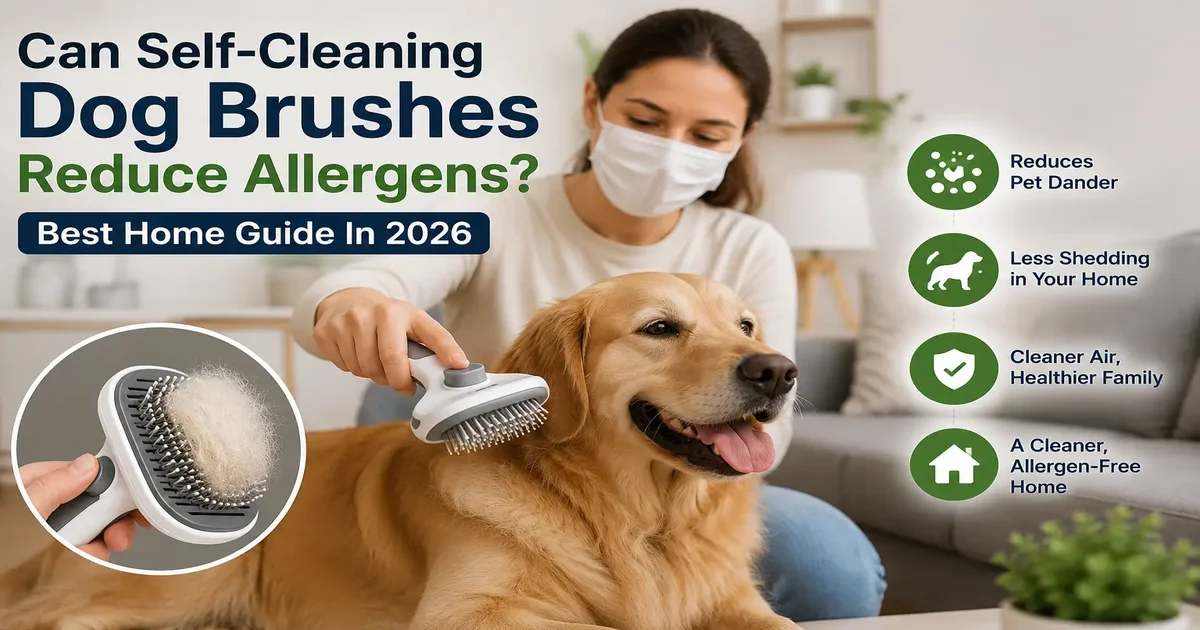
Can Self-Cleaning Dog Brushes Reduce Allergens?: Best Home Guide In 2026
Yes, self-cleaning dog brushes can cut home allergens when used the right way.
If a sneeze follows your dog from room to room, you are not alone. In this guide, I draw on hands-on grooming work and allergy-aware home setups to answer Can Self-Cleaning Dog Brushes Help Reduce Allergens At Home? We will break down how allergens spread, what these tools can and cannot do, and how to build a simple routine that helps you breathe easier without guessing.

Source: co.uk
What Is a Self-Cleaning Dog Brush?
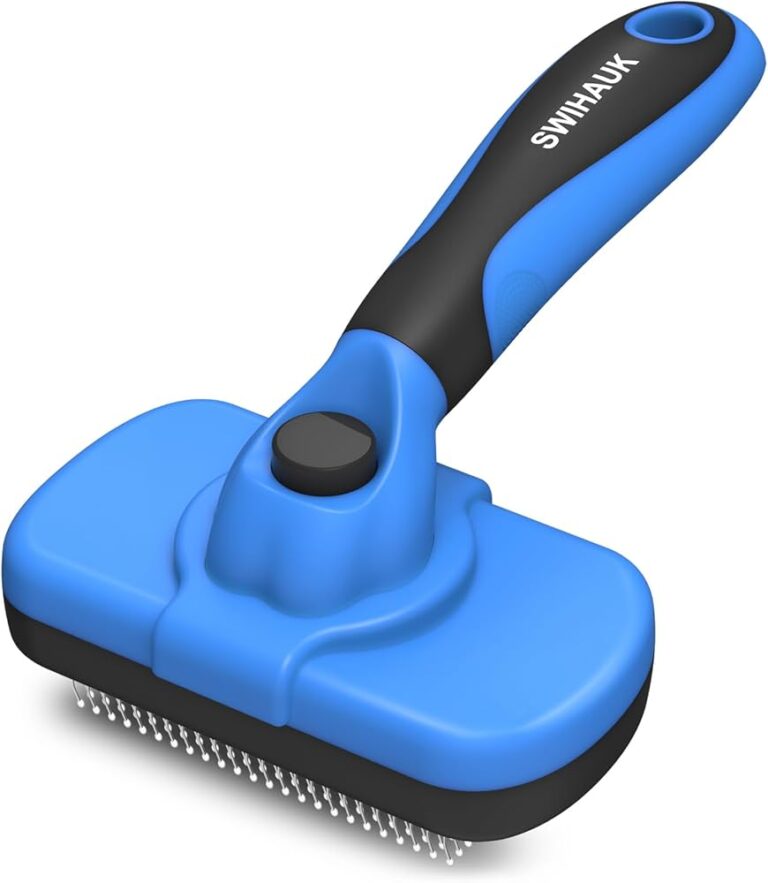
A self-cleaning dog brush is a grooming tool with a hair-eject feature. Most use a retractable plate that pushes fur off the pins with a button. Some use a slide or lever to clear hair in one motion. This keeps loose hair in one place and off your floors.
The main types are slicker-style pins for shedding coats and bristle-style for short coats. Many also have anti-static coatings and curved heads for better reach. The big win is fast cleanup, which makes daily brushing more likely.

Source: com.be
How Dog Allergens Spread Indoors
Dog allergens are tiny proteins from dander, saliva, and urine. They ride on hair and dust. They stick to soft items like sofas, drapes, and rugs. When you walk, sit, or vacuum without a HEPA filter, you can send them back into the air.
Dogs also bring in pollen and dust from outside. These cling to fur and paws. In dry rooms, static helps dander float longer. Good grooming cuts loose hair and surface dander before they spread.

Source: co.uk
Can Self-Cleaning Dog Brushes Help Reduce Allergens At Home?
Short answer: yes, when used as part of a steady routine. Self-cleaning dog brushes help trap shed hair and attached dander at the source. The self-cleaning button lets you clear the brush fast, so you can toss fur into a sealed bin. Less fur on floors and fabric means fewer places for allergens to collect.
There is a caveat. Dander is small and can slip past any brush. Brushing may puff some into the air in the short term. The fix is to brush outside or in one spot with an air purifier on high. Over time, regular grooming with self-cleaning dog brushes lowers the pool of loose hair and dust. Many allergy guides point to frequent grooming, HEPA filtration, and hot-water laundry as a sound trio. The brush makes the first step easier and cleaner.
Source: walmart.com
Benefits And Limitations
Benefits:
- Cuts loose hair fast: Self-cleaning dog brushes pull and hold shed fur so it does not spread.
- Encourages routine: Easy cleanup means you will groom more often, which matters most.
- Cleaner disposal: One-button ejection drops fur into a trash bag with less mess.
- Better coat health: Gentle, steady grooming spreads skin oils and reduces mats that trap dust.
Limitations:
- Not a cure: Dander is tiny. You still need HEPA filters, smart cleaning, and laundry.
- Short-term air rise: Brushing can lift some dust. Use the right room and tools to offset it.
- Coat match matters: The wrong brush can miss undercoat or irritate skin.
- Skin issues: Dogs with hot spots or allergies may need vet-approved tools and pace.

Source: amazon.com
How To Use Self-Cleaning Dog Brushes To Cut Allergens
Follow this simple plan:
- Pick a set spot: Brush outside, on a porch, or in a laundry room with a purifier on.
- Prep the coat: Lightly mist the coat with water or grooming spray to reduce flyaway dust.
- Brush with the grain: Use short, gentle strokes. Start at the neck and go to tail.
- Empty as you go: Press the self-cleaning button often and drop fur into a lined bin.
- Wipe and wash: After brushing, wipe the dog with a damp microfiber cloth. Wash hands.
- Groom schedule: Brush daily for heavy shedders, every other day for most dogs, weekly for low-shed breeds.
- Bathe smart: Use a gentle, vet-safe shampoo every 4–6 weeks, or as your vet suggests.
Source: walmart.com
How To Choose The Right Self-Cleaning Dog Brush
Match the brush to the coat:
- Double coats and heavy shedders: Self-cleaning slicker brush with fine, angled pins.
- Curly or wavy coats: Self-cleaning slicker with flexible pins to avoid breakage.
- Short, smooth coats: Self-cleaning bristle or rubber pin brush for surface hair.
- Sensitive skin: Rounded pin tips and soft tension.
Look for features that help reduce allergens:
- One-hand eject button for quick, clean disposal.
- Stainless steel pins for easy sanitation and long life.
- Anti-static surface to cut airborne fluff.
- Ergonomic handle to reduce hand strain, so you groom longer.

Source: co.uk
A Whole-Home Plan To Reduce Allergens
Self-cleaning dog brushes work best with these add-ons:
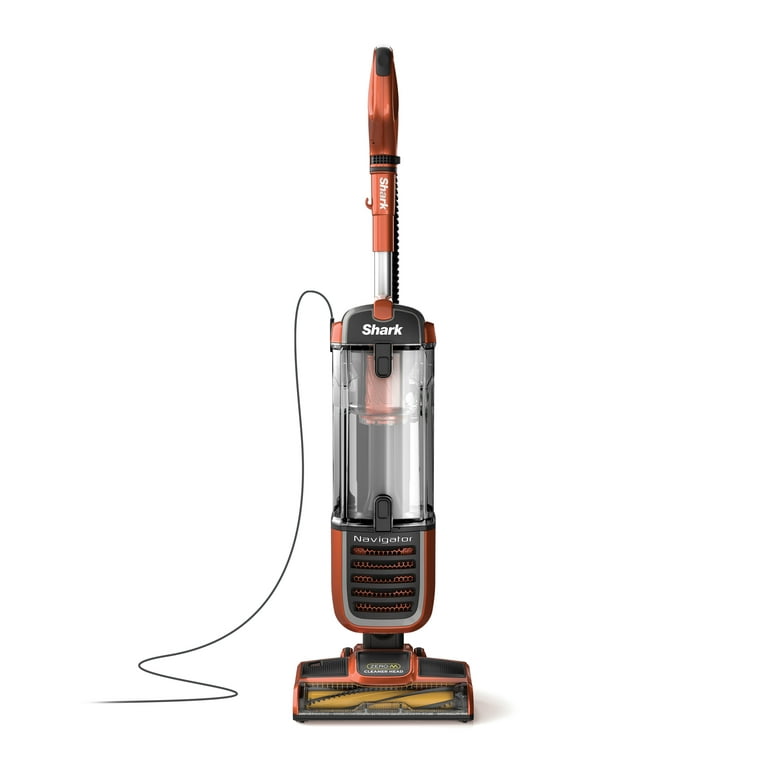
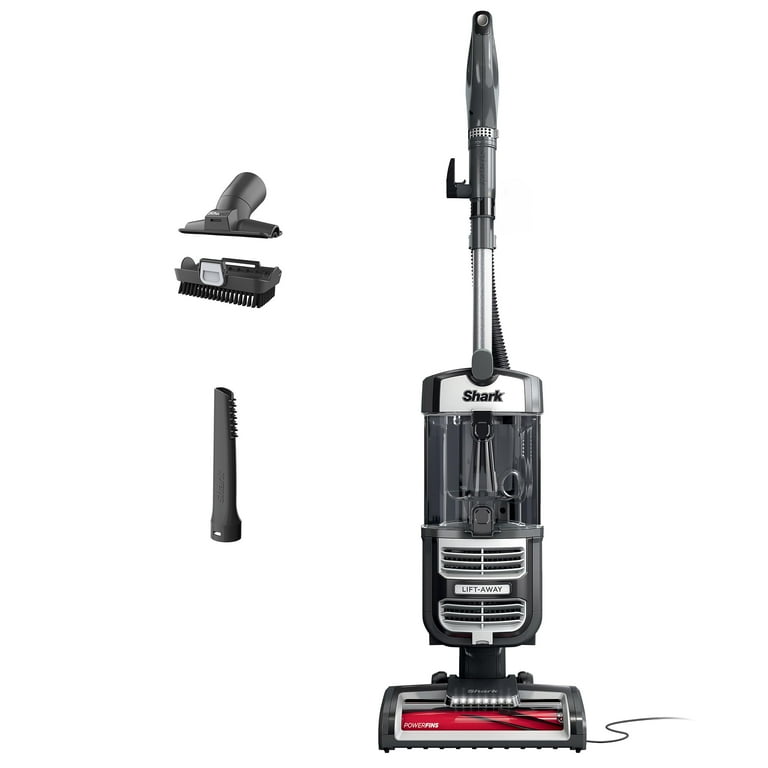
- HEPA vacuum: Vacuum two to three times per week. Use slow passes on rugs and sofas.
- Air purifier: Run a HEPA purifier in living areas and the bedroom.
- Laundry: Wash dog beds, throws, and cushion covers weekly in hot water when allowed.
- Dusting: Use a damp microfiber cloth so dust sticks, not spreads.
- Filters: Upgrade HVAC to a higher MERV rating as your system allows.
- Entry care: Wipe paws and coat after walks to cut pollen and dust.
- Fabrics: Choose washable covers for sofas and dog beds.

Source: amazon.com
Real-World Insights From The Grooming Bench
In homes where I groom weekly, self-cleaning dog brushes changed two things. First, owners groomed more, because cleanup took seconds. Second, we kept hair off fabrics that used to trap dander.
One client with a golden mix used to brush on the couch and sneeze right after. We moved the routine to the porch, added a self-cleaning slicker, and emptied the fur into a bag each pass. The home felt cleaner within a week. Mistakes I see often include brushing too fast, using the wrong head angle, and grooming indoors with fans on. Slow, steady strokes and the right room make a big difference.

Source: thegroomi.com
Frequently Asked Questions Of Can Self-Cleaning Dog Brushes Help Reduce Allergens At Home?
Do self-cleaning dog brushes remove dander or only hair?
They remove shed hair and capture attached dander on that hair. A follow-up wipe with a damp cloth helps lift fine dander left on the coat.
How often should I brush to reduce allergens at home?
Daily for heavy shedders, every other day for most dogs. Short, regular sessions beat long, rare marathons.
Are self-cleaning dog brushes safe for sensitive skin?
Yes, if you choose soft, rounded pins and use light pressure. Check the skin as you go and stop if you see redness.
Can brushing make allergens worse in the moment?
It can lift dust into the air for a short time. Brush outside or run a HEPA purifier on high to limit this.
Which breeds benefit most from self-cleaning dog brushes?
Double-coated and moderate-to-heavy shedders see big gains. Short-hair breeds still benefit from fast cleanup and better routine.
What else should I do besides brushing to reduce pet allergens?
Use a HEPA vacuum, wash textiles weekly, and run an air purifier. Keep a set grooming spot and toss fur into a sealed bag.
Conclusion
Self-cleaning dog brushes make grooming fast, clean, and repeatable. Used in the right place and on the right schedule, they help cut the pool of shed hair and attached dander that fuels home allergens. They are not a cure, but they are a smart first step in an allergy-aware plan.
Pick a brush that matches your dog’s coat, set a simple routine, and pair it with HEPA tools and hot-water laundry. Start this week and track how you feel. If this guide helped, share it with a friend or subscribe for more simple, science-backed pet care tips.